


Most homeowners do not call a foundation contractor and ask for helical piers. More often, they call because something feels off. It may be a crack that wasn’t there last spring that catches their attention. In another part of the house, the floor seems slightly different underfoot than it did a few years ago. None of these issues automatically mean a foundation requires structural stabilization, but they are often the reasons an inspection gets scheduled.
The interesting part is that two homes can display similar symptoms and require very different solutions. That is why experienced foundation specialists spend much more time investigating the cause of movement than discussing repair methods during an initial visit.
Evaluating Patterns Rather Than Individual Problems
Foundation repair specialists are usually looking for patterns and not a single crack during their assessment. They want to know whether movement appears isolated or whether multiple areas of the structure are responding to the same underlying issue.
Measurements are often taken throughout the home. Floor elevations may be compared from one room to another. Exterior walls, basement walls, and foundation surfaces are examined not simply for damage but for clues about how the structure has been behaving over time. An assessment of this kind typically takes several hours on-site, and more complex cases may involve a follow-up visit before any recommendation is made.
In many cases, the inspection is less about identifying what is wrong today and more about understanding what has been happening for years.
What the Soil Is Doing Matters
What happens beneath the structure frequently determines whether settlement continues or stabilizes. Soil movement, drainage patterns, long periods of rainfall, and seasonal moisture fluctuations all influence foundation performance.
A home sitting on stable soil may develop minor cosmetic cracks without requiring structural repairs. A different property may continue experiencing movement because the soils supporting the foundation are no longer providing consistent support. On significant projects, this determination is not made by observation alone. A geotechnical evaluation or soil boring may be carried out to identify what load-bearing strata are present and at what depth. This is where the conversation sometimes shifts toward helical piers in Waterloo, IA.
When Settlement Appears Active
Not every foundation problem points to a need for piers. Competent experts typically want evidence that ongoing settlement is occurring before recommending a stabilization system. Establishing that evidence takes more than a visual inspection. Crack monitoring carried out over several weeks, or a detailed elevation survey of the floor, is how a contractor actually confirms that movement is progressive rather than historic.
The goal is to check if the house has reached a stable condition or whether movement remains active.
When active settlement is present, simply repairing visible damage often produces disappointing results. Cosmetic improvements can hide symptoms temporarily. But they don’t necessarily deal well with the underlying conditions.
Why Helical Piers May Be Ideal
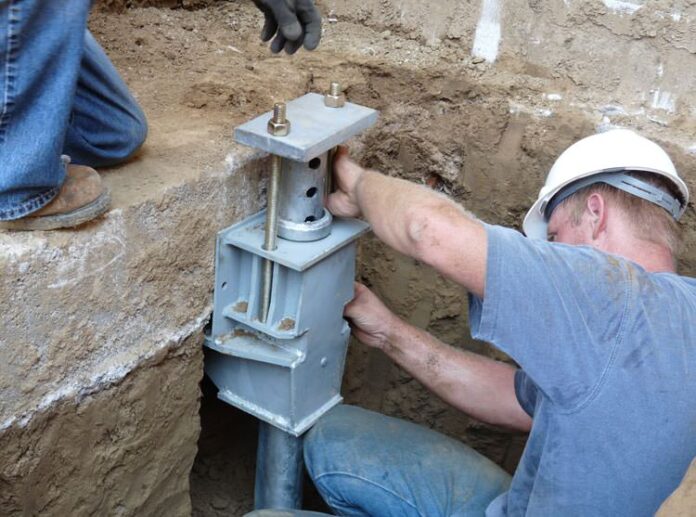
Foundation specialists generally recommend helical piers in Waterloo, IA when additional support is needed beneath portions of the structure. Where access is limited or loads are lighter, push piers may be evaluated as an alternative method, though the soil conditions and depth to stable strata typically guide that decision.
These piers do not rely on surface soils that may expand, shrink, or shift over time. Instead, these piers are installed into deeper load-bearing strata. This allows structural loads to be transferred beyond the unstable soils contributing to settlement.
What surprises many homeowners is how much analysis occurs before that recommendation is made.
A reputable contractor does not begin with the assumption that every settling foundation needs piers. The recommendation comes after evaluating movement patterns, foundation conditions, and the behavior of the soils supporting the home.
The Recommendation Comes Last
Many homeowners expect an inspection to begin with solutions. In reality, the opposite is usually true.
The most effective foundation repair plans emerge from understanding the problem first. Measurements, observations, and drainage conditions help shape the final recommendation. For transactions involving a sale or financing, a structural engineer’s report may also be required. That document is separate from the contractor’s assessment and carries the authority a lender or buyer typically needs before proceeding.
If the findings indicate ongoing settlement and insufficient support beneath the foundation, then experts will be needed. They will include helical piers in Waterloo, IA, as a part of the repair strategy. With this, the focus is not on repairing cracks alone. It is also on addressing the conditions that allowed the movement to occur in the first place.
That distinction is often what separates a short-term fix from a lasting foundation stabilization solution.